di-Lab
This interview was led by Joelle, the editor of Behind Sciences vol.18, and Seung Hyun, a member of di-Lab.
Short Introduction to di-Lab
Since 2018, Professor Kyung Ryul Park has led di-Lab at the Graduate School of Science and Technology Policy (STP), KAIST—a dynamic, interdisciplinary team committed to investigating the interplay between technology, development, and governance. In an era where rapid advances in emerging technologies and the data revolution affect not just everyday life but also the larger sphere of global governance, di-Lab takes a transdisciplinary approach to explore how these socio-technical shifts shape national and international development. “di” represents development innovation, digital inclusion, and data ingenuity. The lab’s projects encompass a wide range of themes. These include national development strategies, digital transformation and AI governance, sustainable development through science and technology, digital innovation for development (ICT4D), techno-nationalism and the global political economy, as well as the epistemology of data-driven policy. These projects are largely initiated by Professor Park from diverse institutions, with lab members contributing their expertise to different aspects of each initiative. Through research and collaboration, di-Lab aims to illuminate how new technologies and data-driven solutions can foster more equitable, sustainable, and effective governance on a global scale.
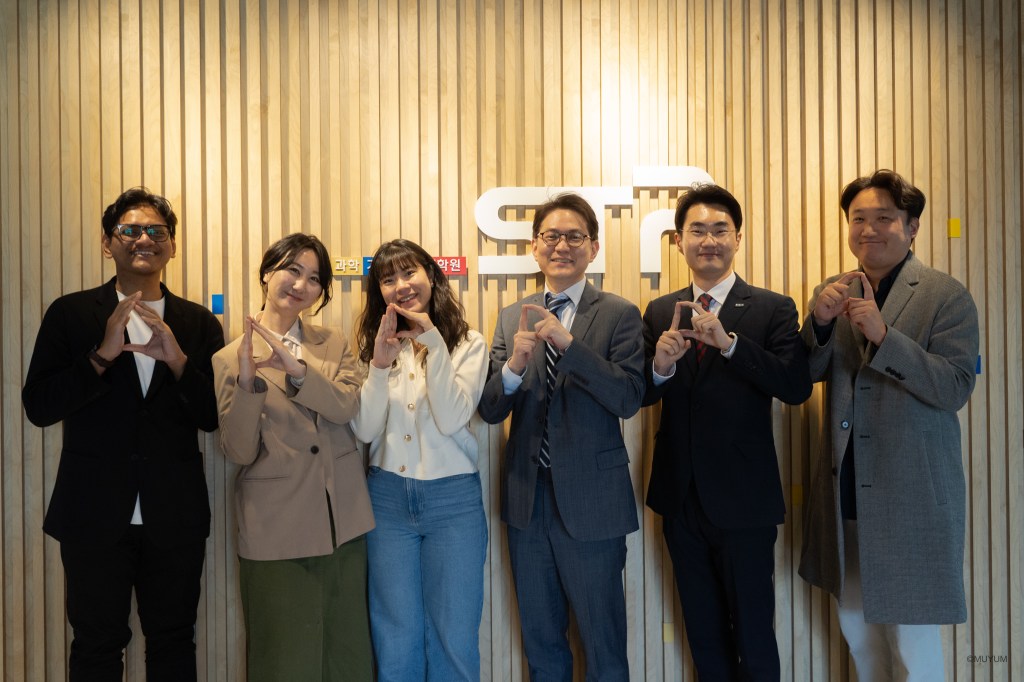
<Figure 1> di-Lab group picture
di-Lab, the voices of members
di-Lab, in the words of Professor Kyung Ryul Park
“When I was an engineering student, I kept wondering: ‘Why are science and humanities so separated, and why is policy-making often disconnected from scientific insight?’ That question stuck with me through every step of my journey—whether I was in a Tanzanian village teaching computers or sitting in the World Bank office discussing data-driven development.
My experience taught me that technology doesn’t solve anything on its own. The same machine-learning algorithm that works wonders in one place can fail in another if we ignore local contexts – culture, politics, or people’s everyday realities. And yet, we still see research is often done in a state of isolation. Policy circles are in respective silos.
That’s why di-Lab emphasizes development innovation, digital inclusion, and data ingenuity – but what is more important than words is what we do. Our research is about bridging gaps and building mutual understanding. We push for data-driven, collaborative research and dialogue among experts, policymakers, and the general public. Our work ranges from AI governance projects to exploring how digital tools can support sustainable development, and much more.
To me, the most exciting part of di-Lab’s mission is helping technology serve real human needs. We want to demonstrate that solutions are stronger when researchers and policymakers are engaged with communities. Ultimately, my hope is that di-Lab can offer a fresh way of thinking—one where science, society, and policy don’t stand apart, but converge to produce tangible, inclusive progress.”
Seung Hyun Kim
I never would have guessed I’d be pursuing a PhD at a science and engineering school. My background is in political science and international relations, and I worked at KDI for nearly a decade in international development – spending 190 days abroad to manage bilateral policy consultations and global partnerships. Yet over time, I saw how deeply technology was influencing every project, prompting me to ask: ‘How can we truly bridge technology and policy?’
At first, what drew me to di-Lab was the notion of development innovation. Coming from the development sector, I focused on how emerging technologies could enhance policy. But after two years here, I realize the “lab” aspect matters most. It’s a space where raw ideas can be tested against completely different perspectives; we’re encouraged to share fresh ideas and concepts so they can grow in unexpected ways.
My research centers on technology sovereignty, especially how international relations and technological development interact. I started with cloud computing and discovered sovereignty is the key lens connecting cooperation and competition. This interdisciplinary lens is exactly what di-Lab thrives on: everyone here approaches problems from wildly different disciplines, then we dig until we find the common threads. In the long run, I hope di-Lab becomes even more diverse – packed with people who have résumés that are full of surprises.
Junho Kwon
I studied nuclear engineering at KAIST, completing my undergraduate and master’s degrees before jumping into the STP PhD program. I also had the chance to serve as the student representative for our wonderful community last year.
For me, di-Lab is simply ‘the lab’—one-of-a-kind, unmatched anywhere else. It’s the perfect place for my main research area: science diplomacy. In an era where global science and technology exhibit both cooperative and competitive dynamics, understanding how these forces play out on the international stage is increasingly important. My work explores the evolution of science diplomacy and the strategic implications for policy in this fast-changing, techno-political world.
What makes di-Lab’s interdisciplinary research possible is its openness. Everyone comes from a different background, so we constantly bounce around new ideas and genuinely listen to each other. As someone with an engineering background, I’ve learned a lot about international relations from fellow lab members. Their insights have reshaped my research approach.
Maulana Sendy Achdika
I started as a product engineer at Huawei Indonesia, then moved on to Telkom Indonesia, where I oversaw a business unit in a remote area of West Java. Leading teams and supervising technical work sparked my curiosity about how digital technology can truly benefit society. That’s why I came to KAIST STP – to explore the policy dimensions of digital transformation.
What draws me most to di-Lab is the concept of digital inclusion. I want to understand how technology can be more accessible and beneficial for people, regardless of their background or circumstances. di-Lab is a space where I feel free to make mistakes, test out bold ideas, and embrace new ways of thinking, especially as I refine my focus on organizational collaboration and policy frameworks for my thesis. Our lab is richly interdisciplinary – members bring backgrounds in engineering, social science, and more – so every conversation opens up new insights. My hope is that di-Lab keeps growing into a platform that not only shapes policy debates here in Korea but also contributes to global conversations on how best to harness digital tech for the common good.
Ryanna Saidnattar
I first studied law in France, quickly noticing how emerging technologies—from property law to contracts—would disrupt much of what I was learning. Craving a broader, more global perspective, I pursued a master’s in technology management, which included a double-degree program at KAIST. After graduation, I worked as a strategy consultant in Toulouse, focusing on the aerospace industry’s adoption of new technologies. Yet I felt compelled to do more than just advise on innovation—I wanted to actively shape it. That desire brought me back to Daejeon and di-Lab to begin my PhD.
I love the phrase ‘development innovation’ because it weaves together two positive concepts—growing and advancing through fresh tools and ideas. I’ve always felt fortunate to be part of a generation witnessing such rapid evolution, and I want to do my part in it, however small. My main research centers on AI governance, particularly how it unfolds in developing countries. Here at di-Lab, the spirit of interdisciplinarity is tangible. Each member brings a different vantage point, and all our projects—diverse as they may seem—share a grounding in technology governance. Since AI governance inherently intersects so many domains, I couldn’t ask for a better research environment. In the long run, I think di-Lab’s goal stays the same: bring diverse people together, spark conversation, and harness that collective energy to make progress.”
Seohee Yoon
My academic journey began in art studies, where I focused on cultural exchange, public diplomacy, and cultural ODA (Official Development Assistance). That eventually led me to specialize in international development. During my early career, I worked with UNFPA (United Nations Population Fund) in Côte d’Ivoire on ODA projects, gaining firsthand exposure to local grassroots challenges in Africa. Later, at the Science and Technology Policy Institute (STEPI), I concentrated on research and policy consultations integrating STI (Science Technology and Innovation) and sustainable development. It was that blend of science, technology, and global collaboration that steered me to STP and di-Lab.
To me, di-Lab signifies ‘Design Innovation.’ As a new member, I’m eager to create my own research niche in ICT4D and STI4SDGs – treating di-Lab as the perfect canvas for experimenting with how technology can truly serve communities. My research explores the intersection of STI and sustainable development, especially ways data-driven solutions can boost digital inclusion in developing countries. I also examine how Korea’s strengths in ICT and STI might position it for collaboration – or competition- with emerging economies.
Stepping into di-Lab’s interdisciplinary environment feels like entering a world of new possibilities. I come from a policymaker’s viewpoint, so being exposed to diverse perspectives here broadens my research approach. In the long run, I see di-Lab’s goals aligning perfectly with my own: harnessing technology for real-world needs. I hope the new center we’re building becomes a dynamic hub where breakthrough ideas address on-site issues, ultimately strengthening di-Lab’s research capabilities and enhancing STP’s leadership in innovative policy solutions.
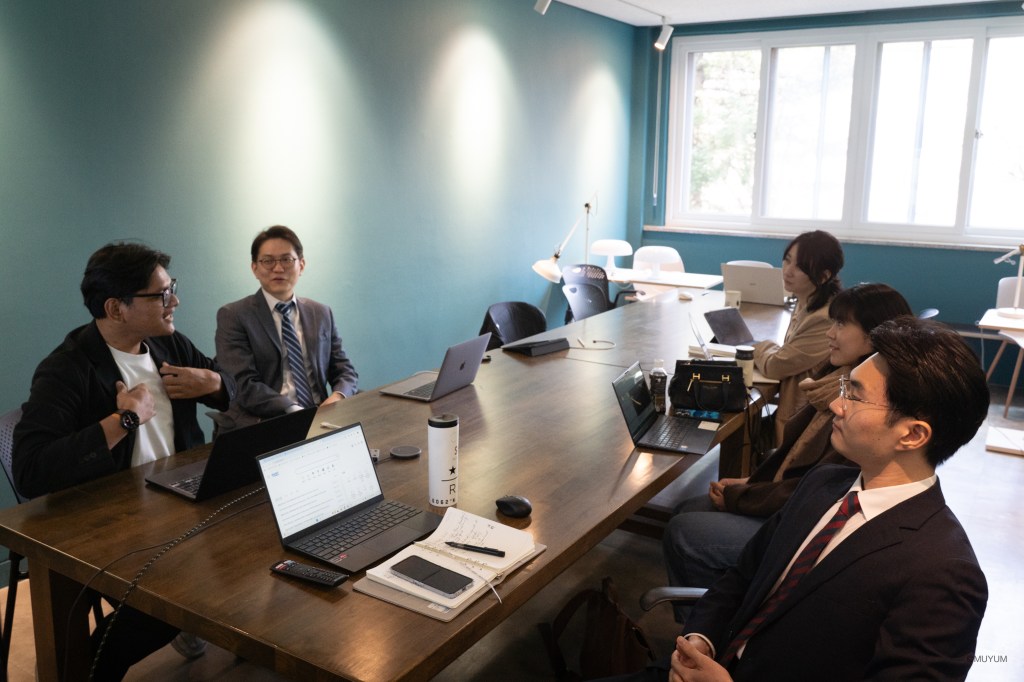
<Figure 2> di-Lab meeting
CSTG as a new hub for research
The newly established Center for Science, Technology, and Global Development (CSTG) represents one of di-Lab’s most exciting collaborations and embodies di-Lab’s commitment to boundary-crossing research. Envisioned as a place where novel ideas meet real-world practice, CSTG aims to foster innovative approaches to science, technology, and policy challenges – much like a creative workshop.
Bridging Global Challenges with Science and Technology
CSTG is positioned to become a global leader in science diplomacy, R&D policy innovation, and international cooperation. With the rapid evolution of emerging technologies, the world is facing unprecedented challenges in governance, regulation, and strategic competition. CSTG will address these issues by integrating cutting-edge research with policy-driven solutions, ensuring that science and technology are leveraged for global development and social progress.
A Multi-Stakeholder Platform for Innovation
The center will serve as a collaborative platform for diverse stakeholders, including policymakers, industry leaders, and academic researchers. Through strategic partnerships with international organizations, top-tier universities, and global think tanks, CSTG aims to shape policy discussions and advance interdisciplinary research in areas such as R&D policy, technology sovereignty, science diplomacy, international development, AI governance, and innovation.
Advancing Policy-Driven Research
CSTG will focus on six key research areas in its early phase:
- National R&D Policy Innovation
- International Research Cooperation and R&D Innovation
- Technology Sovereignty and Global R&D Strategy
- Science Diplomacy
- Science & Technology, AI-driven International Development
- AI and Global Sustainable Development
CSTG, from the voices of di-Lab members
Seung Hyun. “I think the center is more like the Bauhaus than a research center – meant to test new ideas and viewpoints and push them toward practical application – an untethered, safe testbed.”
Junho “I see it as a future top think-tank for global science and technology policy. It can broaden di-Lab’s reach and amplify our work on science diplomacy and international collaboration.”
Ryanna “Most importantly, being part of it makes our research path feels less like a lonely endeavor, which brings a lot of confidence.”
Dika, “I hope this center will shape policymaking in Korea and become a truly global hub. It can play a key role in ensuring digital technology truly serves people’s needs—here and abroad.”
Seohee “My aspiration for the new center is to create a dynamic hub that fosters breakthrough ideas. Ultimately, it will strengthen di-Lab’s capabilities and help STP maintain its leadership in innovative policy solutions.”
Together, these visions illustrate how CSTG extends di-Lab’s mission: bridging technology and policy, fostering inclusive innovation, and working across disciplines to tackle pressing global problems. By serving as a crucible for ideas and a launchpad for real-world impact, CSTG aims to become a defining force for science, technology, and sustainable development research.
In the end, what makes di-Lab work isn’t that we all think alike, but that we don’t. We come from different countries, disciplines, and career paths, but somehow, our conversations click. Our shared habit of zooming out from individual comfort zones allows us to look at systems, policies, and global dynamics instead of just technological artifacts or individual phenomena. We seek to show how things could be done differently. di-Lab isn’t about having all the answers – it’s about staying open to unexpected ones.
Link to di-Lab Webpage: https://www.di-lab.kaist.ac.kr/
 과학뒤켠
과학뒤켠 
댓글 남기기