
Jeonbuk National University
Aung Si Min Htet
andy@jbnu.ac.kr
The Essence of Generative AI
Imagine a machine that can generate human-like text, conceive innovative designs, or even compose symphonies. This is not the stuff of science fiction, but a reality thanks to generative AI. Generative AI is a branch of artificial intelligence that uses machine learning algorithms to create outputs similar to the data it has been trained on. This can include text, images, music, product designs, and architectural plans. It operates using a model of learning called unsupervised learning, where the AI is tasked with making sense of data without specific instructions or labeled examples. The core parts of generative AI are neural networks called Generative Adversarial Networks (GANs), designed to produce new, synthetic instances of data that can pass for real data. It’s a ‘creative’ form of AI that challenges our conventional understanding of machine capability.
The advent of Generative AI brings to mind another revolutionary moment in our history – the shift from typewriters to computers. As we stand at the brink of a new era, this analogy serves not only to highlight the scale of transformation we might witness but also to reassure us based on our previous experiences of technological disruption. Let’s journey back to the era when typewriters ruled the roost. A remarkable invention of its time, the typewriter served its purpose well, enabling professional documentation and correspondence. However, its capabilities were bounded, and its shortcomings were evident. It lacked flexibility – rectifying error was a chore, and rearranging text meant retyping entire documents. With the introduction of computers, a new dawn in information technology arrived. Much like Generative AI today, computers represented a quantum leap from their predecessors. They brought flexibility and efficiency, transforming how we approached tasks. Spell checks, formatting options, and cut-copy-paste tools made writing and editing a breeze. But the impact was much broader, revolutionizing various fields from design and publishing to data analysis and communication.
However, it is important to remember that technological advancement is not a zero-sum game. AI does not have to replace humans; it can augment our capabilities. In the same way that once computers have created new jobs, generative AI has the potential to create new fields and transform existing ones. While specific roles became redundant, a multitude of new jobs and fields emerged. IT support, software development, digital design, data analysis, and countless other careers were born. More importantly, computers became tools that amplified human capabilities rather than mere replacements.
Today, as we stand on the threshold of the Generative AI era, we are witnessing a similar pattern of disruption and fear. Will AI take over our jobs? Could it outpace human creativity? Such concerns are understandable. Yet, drawing from the computer revolution, we see that technological advancement isn’t necessarily a zero-sum game. It’s not about AI replacing humans but about AI augmenting human capabilities. Like the computer revolution, the transition to the Generative AI era will undoubtedly necessitate adaptation. Reskilling and upskilling will be paramount. However, as history has shown us, we are more than capable of rising to the occasion. At the dawn of this new era, we are not just looking at AI that can analyze and predict, but at AI that can create and innovate. This capability opens up a lot of opportunities, and we are only just beginning to see what is possible.
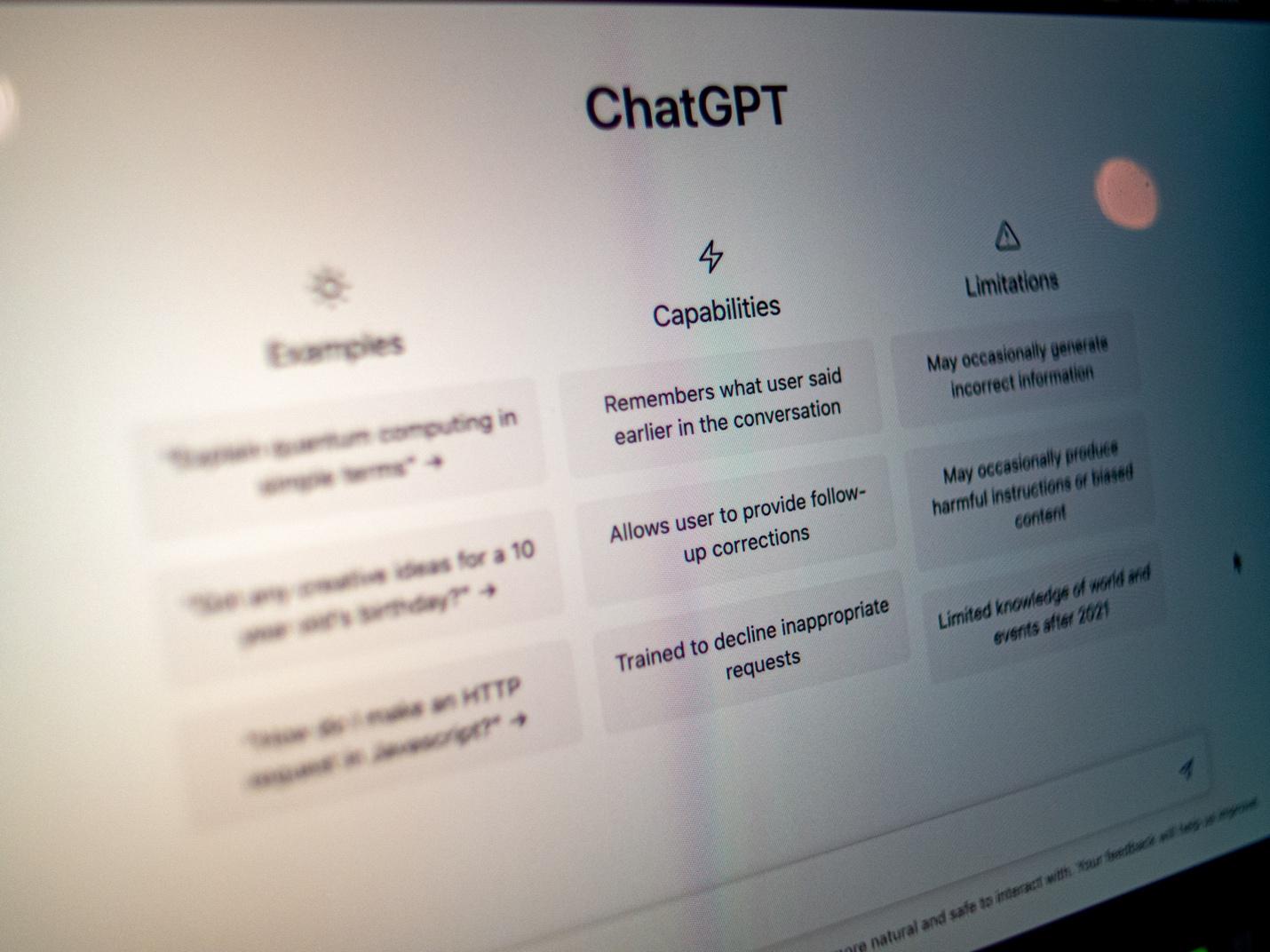
Figure 1. Chat GPT developed by OpenAI (Photo by Emiliano Vittoriosi on Unsplash)
The Core of Generative AI
To truly comprehend the significance and potential of Generative Artificial Intelligence (AI), we must first understand its basic tenets. Generative AI is a category of AI that focuses on creating something new – a transformative capability that goes beyond traditional AI’s role of prediction or classification. It could be as simple as writing a coherent paragraph of text or as complex as crafting a symphony or constructing a blueprint for an architectural marvel. But how does this generation occur? How can an AI, a non-living entity, create something new? The answer lies in the way Generative AI is designed and trained. AI operates on machine learning algorithms – a set of instructions that allows it to learn from data. When it comes to generative AI, it learns to create by being exposed to numerous examples of what it needs to generate. For instance, if the task is to create a piece of music, the AI is trained on hundreds, thousands, or even millions of musical pieces. It studies these pieces to understand patterns, structures, and variations, which it then uses to compose its unique work.
Traditional AI models are designed to work in a wide range of contexts and be used on a large scale. However, generative AI models like GPT are not limited to any specific context. They are easy to use and have simple control mechanisms, which makes them even more scalable. The core of generative AI is a type of neural network called a Generative Adversarial Network (GAN). GANs have two parts: a Generator, which produces the output, and a Discriminator, which evaluates the work. The Generator creates fake data, like a piece of music or an image, and the Discriminator evaluates whether it can pass off as real. This is an adversarial process, because the Generator is constantly trying to improve its output based on the Discriminator’s feedback. The process continues until the Generator produces an output that the Discriminator can’t distinguish from real data. This results in a model that can generate realistic, synthetic instances of data, such as text, images, music, and more. In simpler terms, the Generator is like a counterfeiter trying to create a perfect copy of a masterpiece painting, and the Discriminator is like an art critic who has studied the original artwork in depth. The counterfeiter keeps creating and improving based on the critic’s feedback until the critic can’t tell the copy from the original. This ability to create offers extraordinary possibilities. By synthesizing new data, generative AI has the power to innovate and enhance a wide range of fields, from art and music to medicine and architecture. It can even help in tackling complex global issues like climate change by generating models to predict and mitigate future climate patterns. Generative AI is an embodiment of creative evolution in artificial intelligence. It has the potential to transform the way we create, innovate, and solve problems.
Applications of Generative AI in Different Fields
The potential applications of Generative AI are as vast as they are revolutionary, cutting across multiple industries and reshaping traditional practices. Here is an exploration of how this innovative technology is creating waves in various fields:
- Healthcare and Pharmaceuticals – In the healthcare sector [1, 2], Generative AI is proving to be a valuable tool. It can generate 3D models of proteins or other biological structures, aiding researchers in understanding diseases at a molecular level. Moreover, Generative AI can help accelerate drug discovery, an otherwise time-consuming and costly process, by predicting the effectiveness of potential drugs.
- Arts and Entertainment – In the realm of arts and entertainment [3, 4], Generative AI is blurring the line between human and machine creativity. AI systems have begun to generate original music compositions, with some even producing entire albums. Similarly, AI has ventured into visual arts, creating artwork that has been auctioned for substantial sums. It’s not just about mimicking human creativity, but about generating novel forms of art that push the boundaries of convention.
- Communication and Writing – Generative AI’s prowess extends to the written word as well [5]. AI systems like OpenAI’s GPT series can generate remarkably human-like text. These systems can be harnessed for a wide array of applications, from drafting emails to generating content for websites, reducing human effort, and enhancing efficiency. Even the domain of creative writing isn’t untouched, with AI capable of creating poetry and short stories, offering exciting possibilities for human-AI collaboration.
- Manufacturing and Product Design – Generative AI is also making its mark in the manufacturing and design industry [6, 7]. By generating novel design solutions, AI can aid in product innovation and optimization. For instance, it can design parts for aerospace applications that are lighter yet just as durable, improving fuel efficiency.
What are the Challenges of Generative AI?
Let’s begin by addressing some of the apprehensions. A primary concern is job displacement due to AI automation. Will an AI that can generate code replace programmers? Or an AI that can analyze market trends and generate marketing strategies sideline marketers? The fear is understandable – after all, AI’s efficiency, accuracy, and scalability seem daunting to compete with. Moreover, Generative AI can also present ethical challenges. For instance, healthcare professionals might worry about AI misdiagnosing a patient or violating privacy standards. Data scientists might grapple with biased or unfair outputs if the training data was skewed. Moreover, the emergence of generative AI also brings challenges that society must navigate. One pressing concern is the potential misuse of technology, such as the creation of deepfakes or misleading synthetic media. To combat this, we must invest in counter technologies and establish robust legal and ethical guidelines. Another challenge is the possible disruption to job markets. To adapt to this, it’s crucial that education systems emphasize skills that complement AI, such as critical thinking, creativity, and emotional intelligence.
As an evolving space, generative models are still considered to be in their early stages, giving them space for growth in the following areas [8, 9].
- Scale of compute infrastructure: Generative AI models can boast billions of parameters and require fast and efficient data pipelines to train. Significant capital investment, technical expertise, and large-scale compute infrastructure are necessary to maintain and develop generative models. For example, diffusion models could require millions or billions of images to train. Moreover, to train such large datasets, massive compute power is needed, and AI practitioners must be able to procure and leverage hundreds of GPUs to train their models.
- Sampling speed: Due to the scale of generative models, there may be latency present in the time it takes to generate an instance. Particularly for interactive use cases such as chatbots, AI voice assistants, or customer service applications, conversations must happen immediately and accurately. As diffusion models become increasingly popular due to the high-quality samples that they can create, their slow sampling speeds have become increasingly apparent.
- Lack of high-quality data: Oftentimes, generative AI models are used to produce synthetic data for different use cases. However, while troves of data are being generated globally every day, not all data can be used to train AI models. Generative models require high-quality, unbiased data to operate. Moreover, some domains don’t have enough data to train a model. As an example, few 3D assets exist and they’re expensive to develop. Such areas will require significant resources to evolve and mature.
- Data licenses: Further compounding the issue of a lack of high-quality data, many organizations struggle to get a commercial license to use existing datasets or to build bespoke datasets to train generative models. This is an extremely important process and key to avoiding intellectual property infringement issues.
What are the Benefits of Generative AI?
Generative AI is important for a number of reasons. Some of the key benefits [13] of generative AI include:
- Generative AI algorithms can be used to create new, original content, such as images, videos, and text, that’s indistinguishable from content created by humans. This can be useful for applications such as entertainment, advertising, and creative arts.
- Generative AI algorithms can be used to improve the efficiency and accuracy of existing AI systems, such as natural language processing and computer vision. For example, generative AI algorithms can be used to create synthetic data that can be used to train and evaluate other AI algorithms.
- Generative AI algorithms can be used to explore and analyze complex data in new ways, allowing businesses and researchers to uncover hidden patterns and trends that may not be apparent from the raw data alone.
- Generative AI algorithms can help automate and accelerate a variety of tasks and processes, saving time and resources for businesses and organizations.
The Future of Generative AI
The rise of generative AI brings about an exciting horizon of opportunities. AI developers and data scientists are in great demand to advance this technology. However, generative AI’s potential goes beyond just technical roles. For instance, artists and musicians might collaborate with AI to create novel forms of art. Journalists might work with AI to analyze and write news stories. In the pharmaceutical industry, biotechnologists and chemists could harness AI for drug discovery. As the field continues to grow, there will be an increasing need for ethicists and policymakers to address the complex questions that generative AI poses, from matters of intellectual property rights to issues of deepfake technology.
Generative AI has the potential to significantly improve both our personal and professional lives. It could automate routine tasks, enhance creativity, and provide innovative solutions to complex problems. For instance, imagine an AI assistant that could draft emails or reports for you, freeing up time for more important tasks. Or a personal stylist AI that can create customized fashion designs based on your preferences. For professionals, architects could use generative AI to generate design alternatives, while researchers could use it to form hypotheses based on patterns in data.
Why Not All Is Lost: Embrace, Enhance, and Evolve
Despite these concerns, it’s essential to realize what AI can’t replace – the distinctly human qualities that underlie every profession. As we step into the era of Generative AI, an assortment of challenges and opportunities present themselves. While this transformative technology brings forth unparalleled innovation, it also raises valid concerns for professionals in various fields, from programming and marketing to healthcare. While a Generative AI can write code, it can’t yet fully understand the business context or the specific needs of a client like a seasoned programmer can. It can analyze data and spot patterns, but it doesn’t possess the creative intuition of a marketer to craft a compelling brand narrative. AI may be able to diagnose based on patterns, but it lacks a doctor’s empathetic connection with patients or the wisdom to make nuanced decisions in complex cases.
The key to thriving in the Generative AI era is not to resist but to adapt and integrate this technology into our professional lives. Here’s how various professionals can navigate this new terrain:
- Programmers: AI can automate mundane coding tasks, allowing programmers to focus on higher-level, strategic aspects of projects. Recent advances in AI have made it possible to automate some of the tasks in software development, such as debugging [11]. Additionally, understanding AI and learning to develop and manage AI systems can open new areas in the field of AI development.
- Marketers: Generative AI can offer valuable insights into consumer behavior and trends [12, 16]. Marketers who can harness this information can devise more effective strategies. Furthermore, AI can be used to create personalized content, elevating the customer experience.
- Data Scientists: While Generative AI can automate some data processing tasks, the role of a data scientist becomes ever more critical in designing, implementing, and ensuring the fairness of these AI systems. Even though the GPT models can solve complex problems, these models still lack critical thinking, strategic planning, and complex problem-solving., which means that businesses and organizations will probably still need people who are experts in this field [17].
- Doctors: AI can assist in diagnosing diseases or predicting health risks, but it’s the doctor who validates these findings, considers the patient’s overall condition, and makes the final call. Moreover, Generative AI in medical health care are still facing some critical problems, such as data privacy concerns, inconsistent accuracy, and bias in the training data [15]. Thus, it is unlikely to replace the health care workers immediately.
In the long run, professionals who can use AI to augment their capabilities will have a significant advantage over those who don’t. This doesn’t necessarily mean everyone needs to become an AI expert, but rather develop a foundational understanding of AI, its implications in their field, and how it can be harnessed to amplify their work. Indeed, the advent of Generative AI is not a threat but an invitation – an invitation to embrace a new tool, enhance our abilities, and evolve our roles to drive innovation and progress in this exciting new era.
Final Thoughts
Generative AI is a powerful new technology with the potential to revolutionize many industries. However, it also comes with ethical and societal challenges that we must address. We need to invest in education to equip current and future generations with the skills to thrive in an AI-augmented world. We also need to develop a regulatory framework that provides guidance on issues of intellectual property, misinformation, and deepfakes. Ultimately, generative AI is a tool, and like any tool, its impact will be defined by how we choose to wield it. If we approach it with the responsibility and the eagerness to adapt, the generative AI era promises a future full of exciting opportunities and innovations. The future of AI is not just about technology. It is about how we use technology to shape our world. We have the opportunity to use generative AI to create a more just, equitable, and sustainable future. Here are some specific things that we can do to harness the power of generative AI while also addressing its challenges:
- Invest in education. We need to make sure that everyone has the skills they need to succeed in an AI-augmented world. This means investing in education at all levels, from K-12 to higher education.
- Develop a regulatory framework. We need to develop a regulatory framework that provides guidance on how to use generative AI responsibly. This framework should address issues such as intellectual property, misinformation, and deepfakes.
- Promote responsible use. We need to promote the responsible use of generative AI. This means educating people about the potential risks and benefits of the technology and encouraging them to use it in a way that is ethical and beneficial to society.
By taking these steps, we can ensure that generative AI is used for good and not for harm. We can create a future where generative AI is used to solve some of the world’s most pressing problems, such as climate change, poverty, and inequality.
- Ren, F. & Zhou, Y. (2020), “Cgmvqa: A new classification and generative model for medical visual question answering”, IEEE Access, Vol. 8, pp. 50626-50636.
- Lan, L. et al. (2020), “Generative adversarial networks and its applications in biomedical informatics”, Frontiers in public health, Vol. 8, pp. 164.
- Li, M. et al. (2020), “An abstract painting generation method based on deep generative model”, Neural Processing Letters, Vol. 52, pp. 949-960.
- Xue, Y. et al. (2022), “Giraffe hd: A high-resolution 3d-aware generative model”, Proceedings of the IEEE/CVF Conference on Computer Vision and Pattern Recognition.
- Yang, M. et al. (2022), “Reading and writing: Discriminative and generative modeling for self-supervised text recognition”, Proceedings of the 30th ACM International Conference on Multimedia.
- Mountstephens, J. & Teo, J. (2020), “Progress and challenges in generative product design: A review of systems”, Computers, Vol. 9.4, pp. 80.
- Alcaide-Marzal, J., Diego-Mas, J.A. & Acosta-Zazueta, G. (2020), “A 3D shape generative method for aesthetic product design”, Design studies, Vol. 66, pp. 144-176.
- Dwivedi, Y.K. et al. (2023), “So what if ChatGPT wrote it?” Multidisciplinary perspectives on opportunities, challenges and implications of generative conversational AI for research, practice and policy”, International Journal of Information Management, Vol. 71.
- Helberger, N. & Diakopoulos, N. (2023), “ChatGPT and the AI Act”, Internet Policy Review, Vol. 12.1.
- OpenAI (2023), “GPT-4 Technical Report”, arXiv e-prints.
- Surameery, N.M.S. & Shakor, M.Y. (2023), “Use Chat GPT to Solve Programming Bugs”, International Journal of Information Technology & Computer Engineering (IJITC) ISSN: 2455-5290, Vol. 3.01, pp. 17-22.
- 「5 Ways Chat GPT Will Impact Digital Marketing」, https://www.entrepreneur.com/growing-a-business/5-ways-chatgpt-will-impact-digital-marketing/446208.
- Baidoo-Anu, D. & Owusu Ansah, L. (2023), “Education in the era of generative artificial intelligence (AI): Understanding the potential benefits of ChatGPT in promoting teaching and learning”, Available at SSRN 4337484.
- Goodfellow, I. et al. (2020), “Generative adversarial networks”, Communications of the ACM, Vol. 63.11, pp. 139-144.
- Baumgartner, C. (2023), “The potential impact of ChatGPT in clinical and translational medicine”, Clinical and Translational Medicine, Vol. 13, pp. e1206.
- Peres, R. et al. (2023), “On ChatGPT and beyond: How generative artificial intelligence may affect research, teaching, and practice”, International Journal of Research in Marketing.
- 「Will ChatGPT Put Data Analysts Out Of Work?」, https://www.forbes.com/sites/bernardmarr/2023/02/07/will-chatgpt-put-data-analysts-out-of-work/?sh=48577d1b4030
댓글 남기기